You take a loss. It stings. Before you've even thought about it, you're back in, with a bigger size, to win it back. Then that one loses too.
That's revenge trading: trading to get even with the market, not because your setup appeared.
This guide explains what revenge trading is, how to catch yourself doing it, and seven simple rules that stop one bad trade from turning into a bad day.
What is revenge trading?
Revenge trading means taking a trade to win back a loss, instead of because your plan says so.
It usually looks like one of these:
- Jumping back in seconds after you got stopped out.
- Doubling your size "to make it back faster".
- Moving or removing your stop because you "can't take another loss".
- Trading a market or setup you don't normally trade, just to get some action.
- Taking trade after trade, faster and faster, until the session is over or the account is.
Traders also call this "tilt" (from poker): you're still trading, but your emotions are making the decisions.
Why revenge trading is so dangerous
One loss is normal. It's part of every trading plan. Revenge trading is what turns a normal loss into a big one:
- Bigger size at the worst time. You raise your risk right when your head is least clear.
- No setup. The trade exists because of the last loss, not because of the chart.
- Losses stack. Each new loss makes the next revenge trade more likely, and bigger.
- It breaks your risk rules. Daily loss limits are there for a reason. Revenge trading is how traders blow through them.
Signs you're revenge trading
Be honest with these:
- You entered within a minute or two of a losing trade.
- Your size is bigger than your plan allows.
- You're thinking about the money you lost, not the setup in front of you.
- You can't explain the trade in one sentence.
- You feel angry, rushed, or "due" for a win.
- You've taken more trades today than your plan allows (that's overtrading).
If two or more of these are true, stop. Close the platform for now.
7 rules to stop revenge trading
1. Set a daily loss limit, and respect it
Pick a number you're OK losing in one day. When you hit it, you're done for the day. No "one more". See how to manage risk in trading for how to size it.
2. Use a "cool-down" rule after every loss
After a losing trade, wait a fixed time (for example 10 or 15 minutes) before the next entry. Stand up. Get water. The urge to get even fades fast when you give it a few minutes.
3. Never add size after a loss
Write it into your plan: size stays the same or goes down after a loss, never up. This one rule removes most of the damage revenge trading can do.
4. Stop after a set number of losses in a row
Two or three losses in a row is a signal, not a challenge. Pick your number and stop when you hit it.
5. Trade only your written setups
If a trade isn't on your list, it's not a trade. This also protects you from FOMO trading, which often starts right after a loss.
6. Accept the loss before you enter
Before every trade, know your stop and say: "If this hits, I'm OK with it." If you can't say that, the size is too big.
7. Review your revenge trades on video
This is the one that makes the rest stick. In your memory, a revenge trade feels like "bad luck". On video, you see how fast you clicked, how big you went, and that the setup wasn't there.
Review your revenge trades (the fast way)
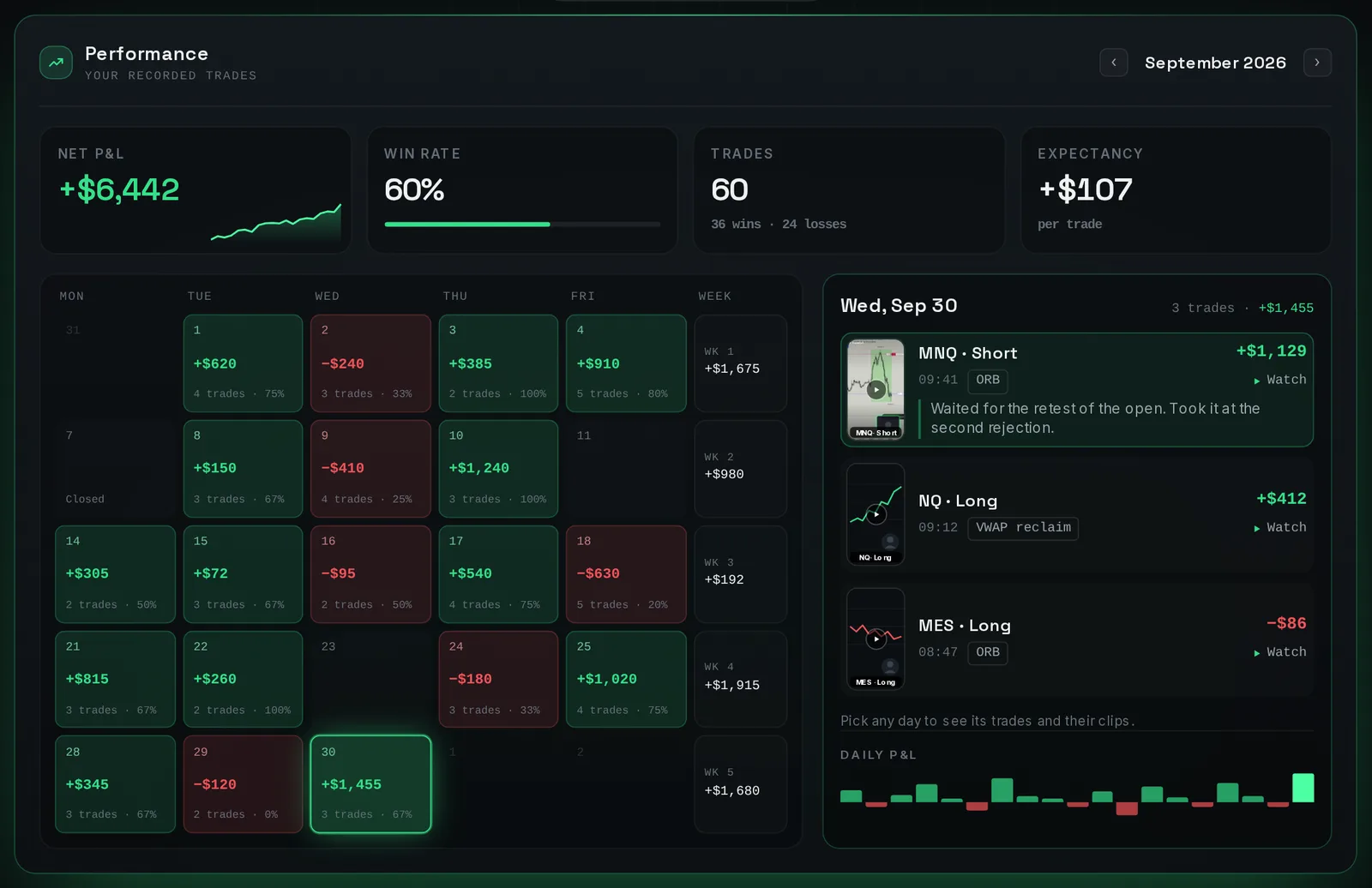
Once a week, look at your losing days and find the trades you took right after a loss. Ask:
- How long after the loss did I enter?
- Was my size the same as normal?
- Was this one of my written setups?
- What was I feeling right before I clicked?
TradeCut makes this quick. It records your trading screen in the background and saves one short clip per trade, from entry to exit, with the symbol, side, time and result. On TradingView it detects your trades by itself. So instead of scrolling through hours of recording, you open the trade right after your loss and watch the moment it happened. Add what you see to your trading journal.
Revenge trading in prop firm challenges
In a prop firm challenge, revenge trading is extra expensive. Firms set a daily loss limit and a maximum drawdown, and one tilted session can break them. Know your firm's exact rules before you start: see Topstep rules explained and how to pass the Topstep Combine.
FAQ
What is revenge trading?
Revenge trading is taking a trade to win back a loss, instead of because your setup appeared. It often comes with a bigger size and a weaker plan.
Why do traders revenge trade?
Losing feels bad, and getting the money back right away feels like the fix. The trade is driven by emotion, not by the chart.
How do I stop revenge trading?
Set a daily loss limit, wait a fixed time after every loss, never add size after a loss, stop after a set number of losses in a row, and review your post-loss trades every week.
Is revenge trading the same as FOMO trading?
No, but they're related. Revenge trading is trying to win back a loss. FOMO trading is chasing a move you missed. Both come from emotion instead of your plan, and one often leads to the other.
What is tilt in trading?
Tilt is a word from poker. It means you're still trading, but frustration or anger is making your decisions. Revenge trading is the most common form of tilt.
Related posts
- Topstep Rules Explained (2026): Max Loss, Consistency Target and Daily Loss LimitTopstep's Trading Combine rules in plain English: the trailing Maximum Loss Limit, the 55% Consistency Target, the Daily Loss Limit and position size, with examples.
- How to Pass the Topstep Combine: A Simple Day-by-Day PlanA practical plan to pass the Topstep Trading Combine: size for the trailing drawdown, cap your best day under 55%, stop on time, and review every trade.